

I once spotted an L300 van on the road. Clean. Professional-looking. Had the company name printed on the side — "[Brand Name] Industrial, Inc."
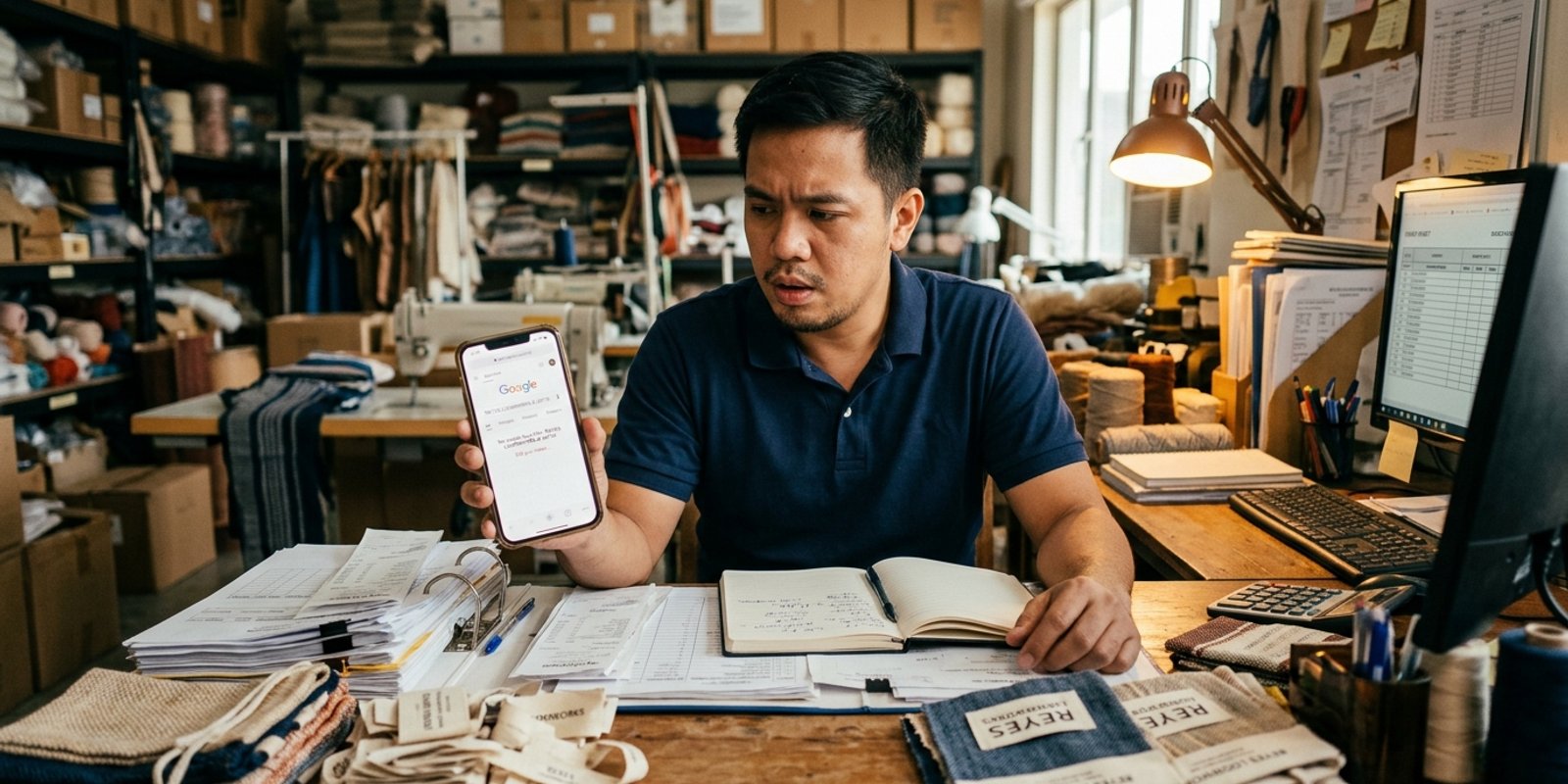
Legit-looking enough that I actually Googled them when I got home.
Nothing. No website. No Facebook page. No Google Business Profile. Just... air.
That truck probably cost over ₱500,000. The branding job alone wasn't cheap. But their online presence? Zero. And just like that, a potential customer — me — moved on.
If that truck were your business, how many customers drove past it — and then Googled you — and found nothing?
Here's what your website needs so that never happens again.
Why It Matters More Than Ever in 2026
Here's a number worth pausing on: 98 million Filipinos are now online. That's 83.8% of the entire population. And of those, 97.8% go online using their phones.
Your customers aren't flipping through directories anymore. They're not asking their neighbors. They Google you first. If they can't find you — or if what they find looks like it was built during the Aquino administration — they move on to whoever shows up next.
A website is no longer a nice-to-have. It's your 24/7 salesperson, your storefront, and your first impression — all in one.
The Non-Negotiables: If It's Missing, You're Losing Customers Right Now
These aren't optional. If your site is missing any of these, you're losing business right now.
1. Your business name — and what you actually do
Sounds obvious. It's not. Too many Filipino business websites lead with a logo and a vague tagline like "Excellence in Service."
What do you do? Say it clearly. In one or two sentences. The moment someone lands on your homepage, they should know exactly what you offer and who it's for.
Bad: "Your trusted partner in industrial excellence." Better: "We supply industrial equipment and fabrication services for construction companies in Cavite and nearby provinces."
2. Contact information — make it stupid easy to reach you
Put your phone number, email address, and location on your homepage. Not buried in a contact page three clicks deep. Right there, visible, clickable.
If you have a physical store or office, embed a Google Map. Customers shouldn't have to guess where you are.
3. A services or products page
One page. List what you offer. Brief descriptions. Prices if you can — Filipinos appreciate transparency, and it saves everyone's time.
If you're worried about competitors seeing your rates, consider this: customers who can't find your pricing will often just go with whoever is upfront about theirs.
4. Fast load time — especially on mobile
Remember: 97.8% of Filipino internet users are on their phones. If your site takes more than 3 seconds to load, a good chunk of visitors will leave before they even see it.
This is one of the biggest silent killers of small business websites here. Unnecessary plugins, uncompressed images, cheap shared hosting — they all slow you down and cost you customers.
The Trust-Builders: What Makes a Stranger Actually Send That Inquiry
Once someone lands on your site, they're asking one question: Can I trust these people?
These elements answer that.
5. An About page that actually feels human
Filipinos do business with people they trust. An About page isn't just a formality — it's your chance to tell your story. When did you start? Why? Who's behind the business?
You don't need to write a novel. Three to four short paragraphs with a real photo of you or your team goes a long way. Stock photos scream "I don't want to show my real business." Avoid them.
6. Real photos of your work, products, or team
A restaurant with no food photos. A construction company with no project photos. A salon with no before-and-after shots.
These are missed opportunities. Real photos build credibility instantly. Your phone camera in good lighting is enough to start.
7. Testimonials or reviews
If you've done good work, show it. A few quotes from satisfied clients — even just three or four — can significantly boost trust with new visitors.
If you have Google Reviews, link to them. If you have happy clients willing to be quoted, ask them. Most will say yes.
The Conversion Layer: Getting Visitors to Actually Contact You
A website that looks nice but doesn't generate inquiries is just a brochure no one reads.
8. One clear call-to-action (CTA)
What do you want visitors to do? Call you? Fill out a form? Visit your store?
Pick one. Make it obvious. Put it above the fold — meaning visitors shouldn't have to scroll to find it.
Examples:
- "Get a Free Quote"
- "Call Us Today: 0917-XXX-XXXX"
- "Send an Inquiry"
9. An inquiry form or Messenger/WhatsApp button
Not everyone wants to call. Some people prefer to message first — especially younger customers. A simple contact form or a Facebook Messenger chat button gives them that option.
Don't make people hunt for a way to reach you.
What Most Filipino Business Websites Get Wrong
After working with businesses across the country, these are the mistakes I see over and over again.
The site looks like it was built in 2015. Design trends move fast. An outdated website signals to customers that maybe your business is outdated too. First impressions matter online just as much as in person.
Too many plugins, too slow to load. Some websites have 30+ plugins running in the background. Every plugin adds load time. Every extra second of load time costs you visitors. Keep it lean.
Not mobile-friendly. If your site looks broken on a phone — text cut off, buttons too small to tap, images overlapping — you're turning away the majority of your potential customers.
No Google Business Profile to back it up. Your website and your Google Business Profile work together. When someone searches your business name, Google shows your profile first. Make sure it's claimed, updated, and has your correct address, hours, and contact info.
Quick Website Checklist
Run through this right now for your existing site — or use it as a guide when building a new one.
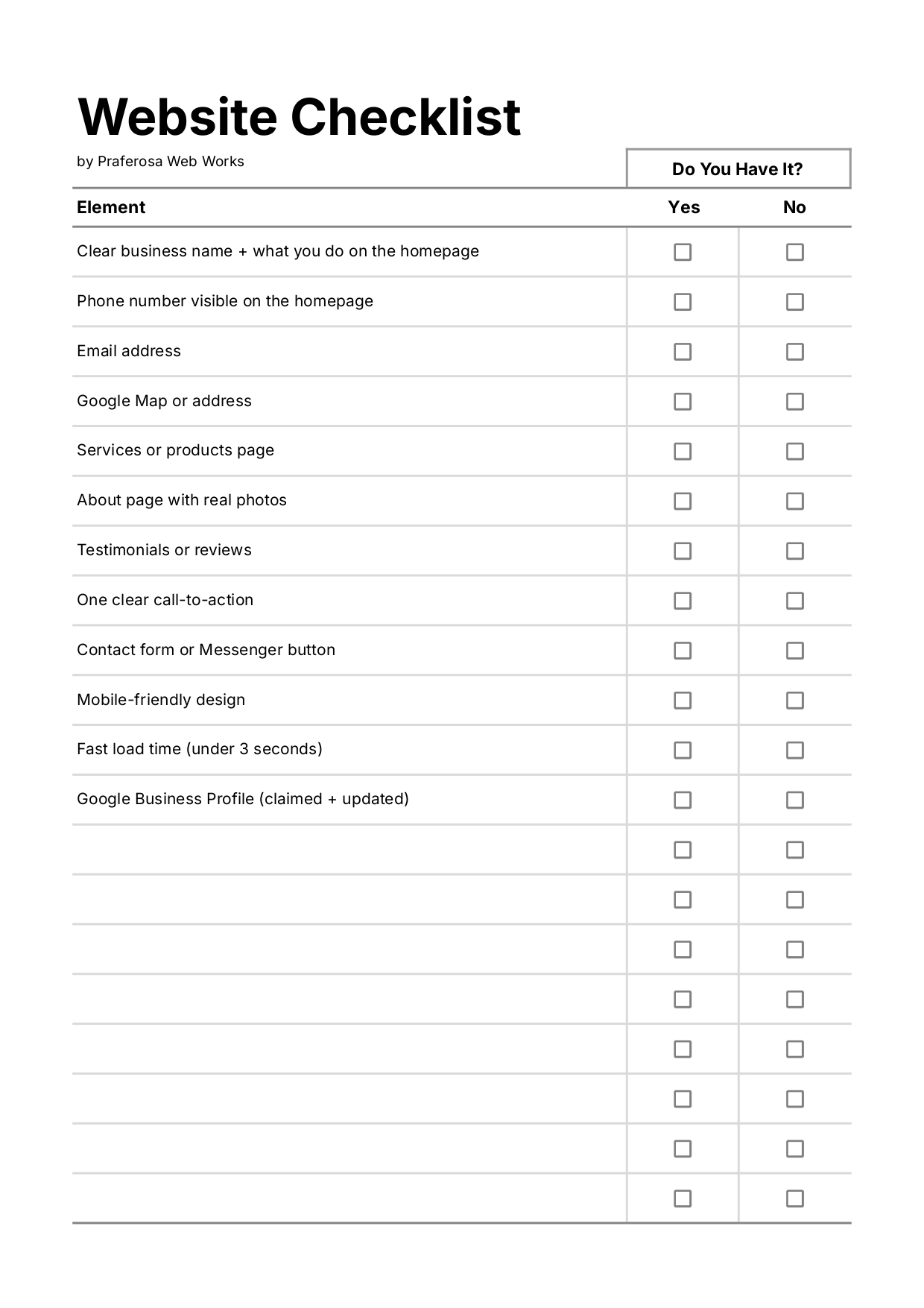
Make a copy of the checklist here → https://docs.google.com/spreadsheets/d/14CcpJSX34P_iXf05tXmbhCMFAB-o0eL-_7aTR-L2k0M/edit?usp=sharing
If you're checking more "No" than "Yes," that's not a criticism — it's an opportunity. Every gap is a chance to get ahead of competitors who aren't paying attention to this.
The Bottom Line
Your competitors are already online. Some of them aren't even that good — they just showed up.
If you want a website that's fast, mobile-ready, and actually brings in inquiries, Praferosa Web Works builds exactly that for Philippine SMEs.